



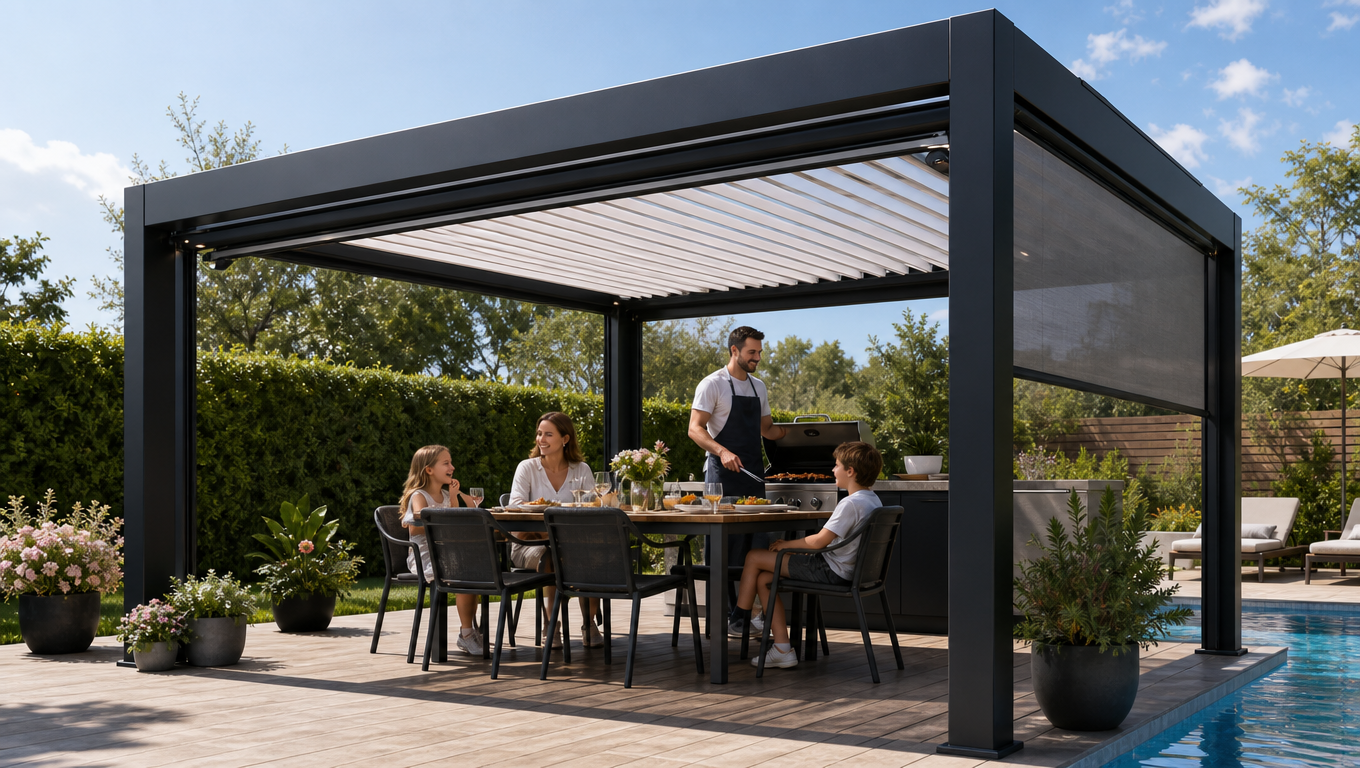
Many homeowners install a pergola expecting a cooler outdoor space, only to discover that their patio is still uncomfortable during hot afternoons. Why is my pergola still hot?
The answer is usually not that pergolas do not provide shade. Instead, the real issue is that pergola shade performance depends on multiple design factors, including roof structure, sun direction, material selection, and whether the system can adapt to changing weather conditions.
A traditional open-beam pergola can reduce direct sunlight and create comfortable filtered shade. However, it may still allow significant heat exposure when the sun angle changes, especially during midday and afternoon hours.
Modern outdoor shade design focuses on controlling sunlight rather than simply blocking it. This is why solutions such as louvered pergolas and motorized aluminum pergolas have become increasingly popular for homeowners who want more consistent outdoor comfort.
In this guide, BESITSOL explains the seven most common reasons a pergola may still feel hot and how to improve shade performance through better design decisions.
Quick Answer: Why Is My Pergola Still Hot?
A pergola can still feel hot because the structure may only provide partial shade instead of controlling sunlight throughout the day.
The most common causes include:
- Open roof designs allow direct sunlight through
- Pergola orientation exposes the space to afternoon sun
- The roof cannot adjust according to changing sunlight angles
- The structure lacks side protection
- The material and design are not optimized for heat control
| Factor | Impact On Heat |
|---|---|
| Roof Design | Determines how much sunlight enters |
| Sun Orientation | Affects afternoon heat exposure |
| Louver Adjustability | Controls changing sunlight conditions |
| Side Protection | Reduces low-angle sunlight |
| Material Quality | Affects long-term performance |
1. Your Pergola Roof Design May Not Provide Enough Shade
The biggest reason a pergola remains hot is the roof design.
Many traditional pergolas use an open-beam structure. This design creates a beautiful balance between sunlight and shadow, but it does not completely block solar exposure.
Open pergolas are designed for:
- Natural airflow
- Filtered sunlight
- An open outdoor feeling
However, the same features that create openness can also allow heat to enter.
During summer afternoons, sunlight can pass through roof gaps and directly heat outdoor furniture, flooring, and surrounding surfaces.
| Pergola Roof Type | Shade Performance | Heat Control |
|---|---|---|
| Open Beam Pergola | Filtered shade | Limited |
| Fabric Covered Pergola | Higher shade coverage | Moderate |
| Louvered Pergola | Adjustable shade | High |
| Motorized Waterproof Pergola | Controlled coverage | Highest flexibility |
If your goal is simply to create a decorative outdoor structure, a traditional pergola may be enough.
However, if your priority is maintaining a comfortable temperature throughout the day, an adjustable roof system provides better control.
2. Your Pergola Orientation May Be Exposing You To Too Much Sun
A well-designed pergola can still feel hot if it is installed in a location with intense direct sunlight exposure.
Many homeowners focus on pergola size but overlook one of the most important factors: sun direction.
The same pergola design can perform very differently depending on its orientation.
| Sun Direction | Common Challenge |
|---|---|
| South Facing | Long periods of direct sunlight |
| West Facing | Strong afternoon and evening heat |
| East Facing | Morning sunlight exposure |
| North Facing | Usually receives less direct sunlight |
West-facing patios are especially challenging because afternoon sunlight enters at a lower angle and can bypass overhead shade structures.
This is why effective outdoor shade planning considers:
- Daily sun movement
- Seasonal changes
- Time of day the space is used
- Need for additional side protection
A pergola should be designed around the environment, not simply placed wherever space is available.
3. A Larger Pergola Does Not Always Mean Better Shade
One common misconception is that a larger pergola automatically creates a cooler outdoor space.
However:
More coverage area does not always equal better shade performance.
For example, a large open-beam pergola may still allow strong sunlight exposure, while a smaller pergola with adjustable louvers can provide more effective shade control.
| Design Choice | Possible Result |
|---|---|
| Larger Open Roof | More space but limited sunlight control |
| Smaller Adjustable Roof | Better control over direct sunlight |
| Properly Designed Pergola | Balanced comfort and coverage |
The most important question is not: "How big is the pergola?"
The better question is: "How effectively can the pergola control sunlight?"
4. Your Pergola Roof Cannot Adjust To Changing Sunlight Conditions
One of the biggest limitations of traditional pergolas is that the roof position is fixed.
The sun does not stay in one position throughout the day. A pergola that provides comfortable shade in the morning may receive direct sunlight several hours later.
This is why many homeowners experience a common problem:
"My pergola provides shade sometimes, but not when I need it most."
Fixed roof structures cannot respond to changing sunlight angles. Once the pergola is installed, the shade pattern remains mostly unchanged.
| Time | Sun Condition | Traditional Pergola | Louvered Pergola |
|---|---|---|---|
| Morning | Low-angle sunlight | Partial shade | Adjust louvers for comfort |
| Midday | Strong overhead sunlight | Limited adjustment | Close louvers for more shade |
| Afternoon | Low-angle direct sun | More exposure | Change angle to block sunlight |
A louvered pergola solves this problem by allowing the roof system to adapt throughout the day.
Instead of accepting whatever shade a fixed roof creates, homeowners can actively control:
- How much sunlight enters
- How much airflow passes through
- When the outdoor area needs more protection
This difference is especially important for patios used during peak sunlight hours, such as afternoon dining, outdoor entertaining, or poolside relaxation.
5. Your Pergola May Need Side Protection To Block Low-Angle Sunlight
Many homeowners focus only on overhead shade and overlook another major source of heat: horizontal sunlight.
A pergola roof can block sunlight from above, but afternoon sunlight often enters from the side, especially on west-facing patios.
This creates a common situation:
The pergola is shaded above, but the seating area is still hot.
The reason is simple:
Sun protection requires both overhead coverage and side management.
| Heat Source | Common Solution |
|---|---|
| Overhead sunlight | Louvered pergola roof |
| Afternoon side sun | Outdoor roller shades or screens |
| Heat reflection from surfaces | Better material and layout planning |
For complete outdoor comfort, many advanced pergola systems combine:
- Adjustable louver roofs
- Integrated drainage systems
- Optional side shade solutions
This approach creates a more controlled outdoor environment compared with a simple overhead structure.
6. Your Pergola Material Can Affect Long-Term Shade Performance
Material selection is not only about appearance and durability. It also affects how well a pergola system performs over time.
For modern adjustable pergolas, aluminum has become one of the preferred materials because it provides the structural stability required for advanced roof systems.
Why Aluminum Pergolas Perform Better
Structural Stability
A louvered pergola depends on precise movement between multiple roof components.
A strong aluminum frame helps maintain:
- Accurate louver alignment
- Smooth opening and closing
- Reliable operation over time
This is especially important for larger pergola systems where small structural changes can affect roof performance.
Weather Resistance
Outdoor shade structures are exposed to:
- UV exposure
- Rain
- Humidity
- Temperature changes
High-quality aluminum pergolas are designed to maintain performance with less maintenance compared with many traditional outdoor materials.
Supports Smart Outdoor Features
Modern aluminum pergolas can integrate:
- Motorized louver controls
- Remote operation
- LED lighting systems
- Weather automation
These features allow the pergola to become an active outdoor climate-control solution rather than a fixed structure.
Learn more about BESITSOL's custom motorized aluminum pergola designed for adjustable shade control and modern outdoor living.
7. Your Pergola May Need Adjustable Shade Instead Of Fixed Shade
The final reason a pergola may still feel hot is choosing a shade system that does not match your lifestyle.
A fixed pergola works well for homeowners who want:
- Decorative outdoor architecture
- Filtered natural light
- Simple shade coverage
However, homeowners who use their outdoor space every day often need more control.
This is where a motorized louvered pergola provides a major advantage.
| Feature | Traditional Pergola | Motorized Louvered Pergola |
|---|---|---|
| Shade Control | Fixed | Adjustable |
| Sun Tracking | No | Yes |
| Airflow Control | Natural only | Adjustable |
| Rain Protection | Limited | Better protection |
| Daily Comfort | Depends on conditions | Consistent control |
For homeowners asking: "How can I make my pergola cooler?"
The answer is usually not simply adding more size. It is improving the ability to control sunlight.
How To Choose A Pergola That Actually Provides Better Shade
Choosing the right pergola requires looking beyond appearance. A beautiful pergola may still fail to provide comfortable shade if the design does not match your environment.
Before purchasing a pergola, consider these factors:
| Selection Factor | What To Consider |
|---|---|
| Roof System | Adjustable louvers provide more control than fixed beams |
| Location | Consider sun direction and afternoon exposure |
| Material | Aluminum provides durability and structural stability |
| Usage | Match the system to daily outdoor activities |
| Future Features | Consider lighting, screens, and automation |
Choose Shade Control Instead Of Just Shade Coverage
The most important difference between basic and advanced pergolas is control.
A fixed structure creates one shade pattern.
An adjustable pergola allows you to change the environment based on:
- Time of day
- Weather conditions
- Outdoor activities
This flexibility is why many modern outdoor living spaces are moving toward motorized louvered pergola systems.
Consider Your Outdoor Space As A Complete System
The best shade solution often combines multiple elements:
- Roof protection
- Side shade solutions
- Lighting
- Comfortable outdoor furniture placement
A pergola should not only look attractive. It should improve how your outdoor space is used throughout the year.
Frequently Asked Questions About Pergola Shade Performance
Why is my pergola still hot?
A pergola may still feel hot because the roof design, sun direction, or lack of adjustable shade control allows too much direct sunlight into the space. Open pergolas provide filtered shade, while louvered systems provide more control.
Do pergolas block afternoon sun?
Traditional pergolas may not fully block afternoon sun because low-angle sunlight can enter from the sides. Adjustable louvers and side shade systems provide better protection.
What type of pergola provides the most shade?
A motorized louvered pergola generally provides the highest level of shade control because the roof can adjust according to sunlight conditions.
How can I make my pergola cooler?
You can improve pergola comfort by adding adjustable roof systems, side shades, proper orientation, and heat-resistant materials such as aluminum.
Are louvered pergolas worth it?
Louvered pergolas are worth considering for homeowners who want flexible shade, improved outdoor comfort, and better control over changing weather conditions.
Does pergola material affect heat performance?
Yes. A durable aluminum pergola provides structural stability for adjustable roof systems and supports long-term outdoor performance.
Final Thoughts: A Cooler Pergola Requires Better Shade Control
If your pergola is still hot, the problem is usually not the pergola itself. The real issue is whether the design can effectively manage sunlight throughout the day.
Roof design, sun orientation, material quality, and adjustability all determine how comfortable your outdoor space will be.
Traditional pergolas provide beautiful filtered shade, but modern motorized aluminum louvered pergolas offer a more advanced approach by allowing homeowners to actively control sunlight and outdoor comfort.
Explore BESITSOL's outdoor shade solutions designed for homeowners who want more than basic shade.


