



Quick Answer: Do Pergolas Actually Provide Shade?
Yes, pergolas provide shade, but the level of protection depends entirely on their architectural design:
- Traditional Open-Beam Pergolas: Provide fixed, filtered "dappled" shade (typically blocking 30% to 50% of direct sunlight) depending on beam spacing and solar angles.
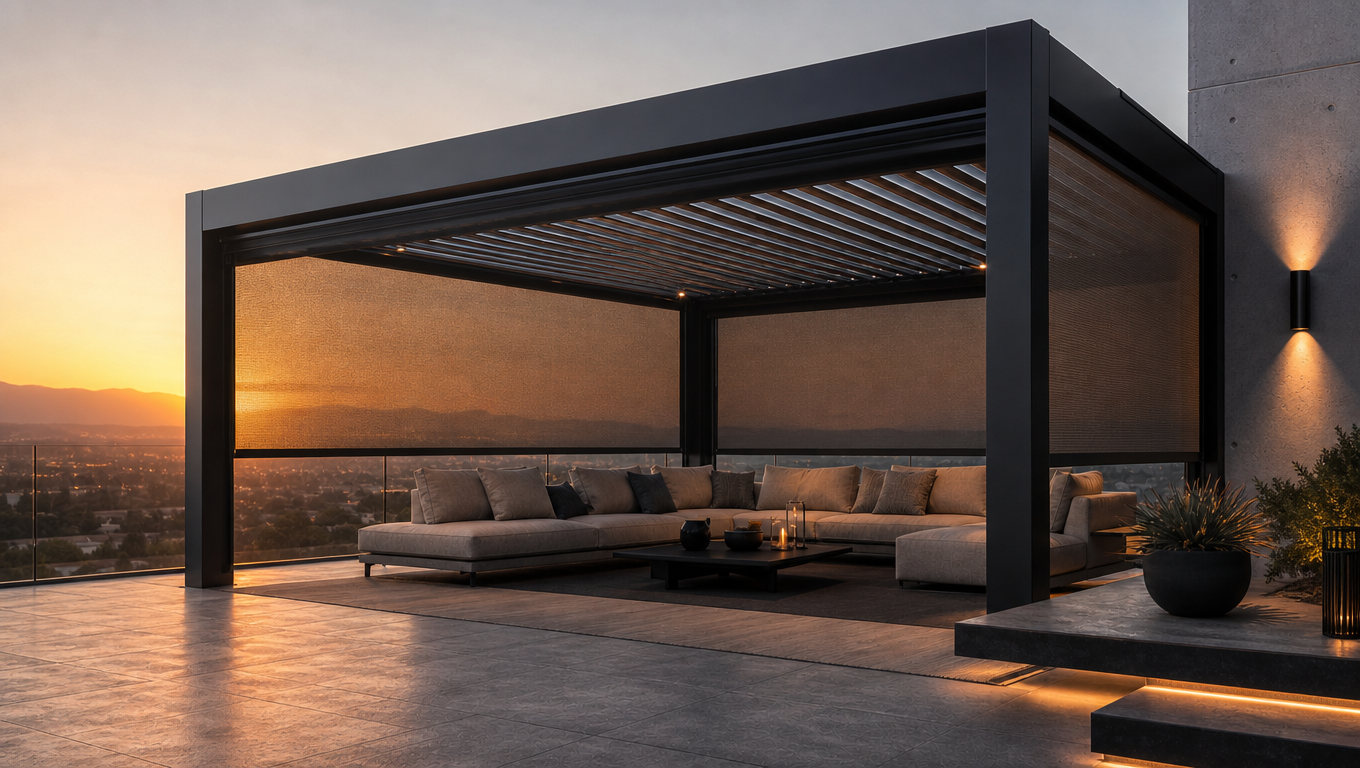
- Modern Bioclimatic Louvered Pergolas: Provide 100% adjustable shade. By rotating the overhead aluminum louvers, you can transition seamlessly from full sunlight filtration to complete, waterproof shade.
- Material Impact: Architectural aluminum systems offer superior heat dissipation and UV block compared to traditional wood, which absorbs and radiates heat back into the living space.
Do Pergolas Provide Shade? The Architectural Guide to Outdoor Thermal Comfort
For homeowners and commercial property designers planning an outdoor lounge or dining area, the question of shade is paramount. A pergola is often chosen for its elegant, open-air aesthetic, but skepticism remains: Can an open overhead structure truly protect you from the harsh midday sun?
The truth is that traditional pergolas were designed historically as structural support for climbing vines, offering beautiful but incomplete shade. Modern outdoor engineering, however, represented by premium brands like BESITSOL, has transformed the humble pergola into a dynamic climate-control system. If you want to design an outdoor sanctuary that remains cool during peak summer heat, you must understand how structural design, orientation, and material choices dictate shade performance.
Traditional Static Shade vs. Modern Bioclimatic Louvers
To choose the right shading structure, you must first contrast the capabilities of traditional static wooden rafters against modern, adjustable engineering. While classic open-beam layouts offer organic, rustic charm, they fall short of providing comprehensive, all-day comfort.
| Performance Metric | Traditional Open-Beam Pergola | Louvered Bioclimatic Pergola |
|---|---|---|
| Sunlight & Shade Control | Fixed. Dappled, filtered shade that shifts continuously as the sun moves. | Adjustable (0° to 120°). Complete control over overhead sunlight. |
| UV Protection | Minimal. Significant UV radiation still penetrates the open gaps between rafters. | Maximum. Double-walled aluminum louvers block 100% of UV rays when closed. |
| Ventilation & Airflow | Excellent vertical airflow, but no ability to block cold drafts. | Customizable. Rotating louvers create a chimney effect to pull warm air upward. |
| Rain & Storm Protection | None. Rain passes directly through the open structure. | 100% Waterproof. Closed louvers channel water into an integrated gutter system. |
The Physics of Shade: Why Some Pergolas Perform Better
Shade is more than just blocking light; it is about managing heat and radiation. Several underlying design factors dictate whether your pergola will feel like a cool, breezy oasis or a stagnant, hot pocket of air.
1. Solar Orientation and Rafter Alignment
If you build a traditional open-beam pergola, its alignment relative to the path of the sun is critical. If your overhead beams run parallel to the sun’s path (East to West), direct sunlight will pour uninterrupted through the gaps for most of the day. Aligning rafters North to South ensures that as the sun moves across the sky, the beams cast cross-cutting shadows, maximizing the duration of filtered shade.
2. The Chimney Effect and Thermal Ventilation
Solid roofs (like solid gazebos or covered porches) block 100% of the sun but trap hot air rising from the ground, creating a sweltering greenhouse effect underneath. This is where bioclimatic engineering shines. By tilting aluminum louvers to a partially open angle (around 15° to 45°), you block direct solar rays while allowing hot air to escape freely upward. This natural convection, or "chimney effect," actively cools the living space underneath by several degrees.
3. Low-Angle Sunlight & Lateral Exposure
Overhead structures are highly effective when the sun is directly above at midday. However, during the early morning and late afternoon, the sun drops to a low angle, shining directly *under* the sides of the pergola. To resolve this limitation, high-end shade designs integrate motorized vertical zip screens into the perimeter frame. This provides dual-axis shade defense, neutralizing both vertical overhead glare and horizontal low-angle sun exposure.
Discover Custom Motorized Aluminum Pergolas
Why settle for static, compromised shade? Our high-precision motorized aluminum pergolas are engineered with premium, double-walled alloy blades and quiet motor drives. Seamlessly adapt to rain, wind, or blazing sunlight at the touch of a button, creating an uncompromising year-round retreat.
Explore Custom Motorized Pergolas →Why Aluminum is the Ultimate Shade Medium
When investing in outdoor shade infrastructure, material durability directly dictates long-term thermal performance. While wood is beautiful, it absorbs moisture, warps over time, and requires intense annual sanding and sealing to prevent rot. Furthermore, thick wood beams retain and slowly radiate atmospheric heat back down into the patio area long after sunset.
Architectural-grade extruded aluminum (such as 6063-T5 alloy) offers a superior alternative for upscale outdoor spaces:
- Precise Mechanical Alignment: Louvered systems rely on perfect millimetric spacing to form a tight seal against rain and direct UV. Aluminum frames are dimensionally stable, meaning they will never warp, twist, or sag like wood under intense sun or heavy snow.
- Premium UV and Heat Deflection: Aluminum pergolas treated with multi-layer architectural powder coatings reflect a massive percentage of solar radiation. Instead of absorbing heat, the hollow, double-walled louver profiles dissipate thermal energy quickly, keeping the shaded zone underneath noticeably cooler.
- Smart Home Adaptability: Lightweight and exceptionally rigid, aluminum supports integrated motorized hardware, solar receptors, LED lighting channels, and automated weather sensors that automatically adjust your shading to real-time wind and sun changes.
Frequently Asked Questions About Pergola Shade
Do pergolas actually block UV rays?
A classic wooden open-beam pergola only reduces direct sunlight partially and does not block indirect UV rays. However, a modern aluminum louvered pergola with double-walled interlocking blades blocks 100% of both direct sunlight and harmful UV radiation when the louvers are closed.
Which type of pergola is best for maximum shade?
A motorized, bioclimatic aluminum louvered pergola is the premier choice for maximum shade. Unlike fixed designs, it allows you to adjust the overhead blades dynamically throughout the day to block the changing angles of the sun while preserving fresh, cooling vertical airflow.
Can a pergola protect me from rain as well?
Traditional pergolas offer zero rain protection. Modern aluminum bioclimatic systems, however, are fully waterproof when the motorized louvers are closed. They utilize internal gutter channels built into the roof support beams to divert water away cleanly through concealed downspouts inside the posts.
Craft Your Perfect Microclimate
Don't let the weather dictate your outdoor lifestyle. Our expert design team can help you configure a custom bioclimatic pergola solution tailored to your backyard's specific sun exposure and architectural aesthetic.
Explore BESITSOL Motorized Pergolas```


