



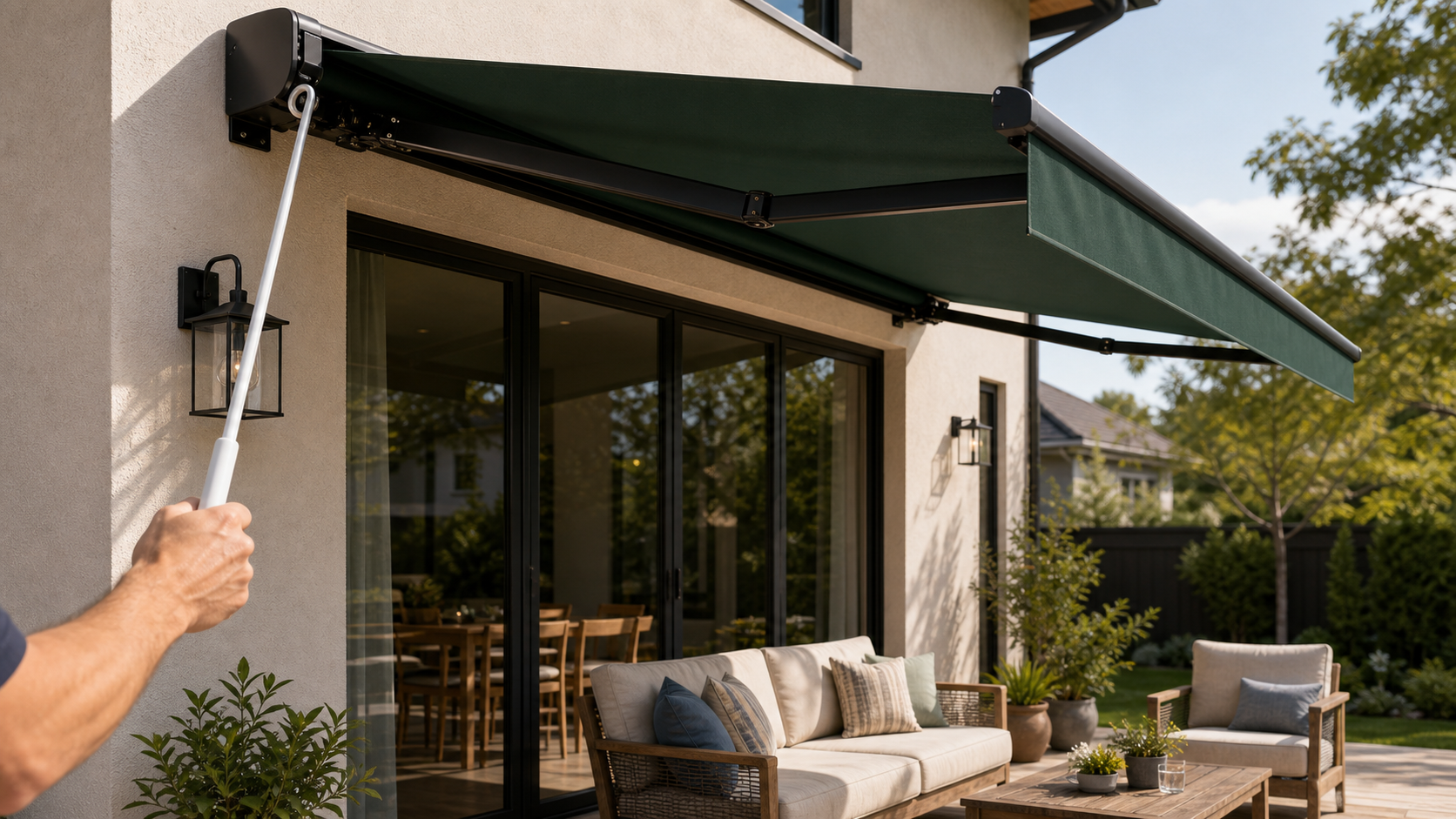
A retractable awning is only as good as the wall that supports it. Before choosing fabric or operation, confirm where the awning can actually mount, how much clearance is available, and whether the projection will cover the space you want.
This checklist is designed for homeowners, designers, contractors, restaurant owners, and storefront teams planning a BESITSOL awning before production.
1. Confirm the mounting wall material
Start by identifying the wall structure. Awnings should mount into a strong, load-bearing area. The exact fastener and installation method depend on the wall material and local conditions.
- Solid masonry or concrete may require appropriate anchors.
- Wood framing requires locating structural members, not just siding.
- Hollow walls, decorative trim, thin facade materials, or uncertain substrates need professional review.
- Commercial buildings may require property approval, permits, or contractor confirmation.
If you are unsure, photograph the wall and consult a qualified installer before ordering.
2. Measure the available width
Width is the horizontal space available along the wall. Measure the opening, then measure the safe mounting area around it. The awning may need space beyond the glass door or window to provide useful shade.
Watch for outdoor lights, vents, cameras, downspouts, trim, shutters, signs, and nearby corners. A clean product width on paper can become difficult if the wall has obstructions.
3. Choose projection based on the area you actually use
Projection is how far the awning extends outward from the wall. It should relate to the seating, dining, walkway, or storefront zone you want to shade.
Do not choose projection only by patio depth. Think about sun angle, table placement, door swing, grill position, and where people sit during the hottest part of the day.
4. Confirm mounting height and vertical clearance
Mounting height affects head clearance, shade coverage, pitch, and visual balance. Awnings need enough vertical space for brackets, roller or cassette housing, arm movement, and safe pitch.
Check for soffits, gutters, roof overhangs, low eaves, exterior lights, security cameras, electrical boxes, and decorative molding. If the available space is tight, review the BESITSOL Measurement Guide before finalizing a product.
5. Check nearby doors and windows
The awning should not interfere with doors, windows, screens, shutters, or outward-opening features. Open every door and window near the planned mounting area. Look for conflicts when the awning is extended and when it is retracted.
6. Photograph the wall before asking for help
Good photos make support faster. Take images from several distances:
- A straight-on photo of the full wall.
- A wider photo showing the patio, deck, or storefront.
- Closeups of the mounting area above the door or window.
- Photos of gutters, lights, trim, and any obstructions.
- A photo showing where people sit or walk.
Send these through the BESITSOL contact page if you need help narrowing the series or confirming the next step.
7. Match the mounting situation to the right series
The A380, B02, and B04 families are not interchangeable decorations. Each series has a different profile, presence, and use case. The A380 Series is often selected for practical residential shade. Cassette-style options may be better when the facade calls for a more enclosed look.
Wall conditions can influence the choice. If the available height is tight, if the facade is highly visible, or if a storefront needs a cleaner exterior, send photos before deciding.
8. Do not finalize fabric before confirming fit
Fabric is important, but fit comes first. Once width, projection, and mounting height are clear, then compare colors. Use the fabric library and the sample kit to make the final exterior color decision.
Final recommendation
Before ordering, confirm wall material, width, projection, mounting height, obstructions, and photos. A careful pre-order check reduces surprises and helps the finished awning feel intentional, safe, and appropriate for the building.


