



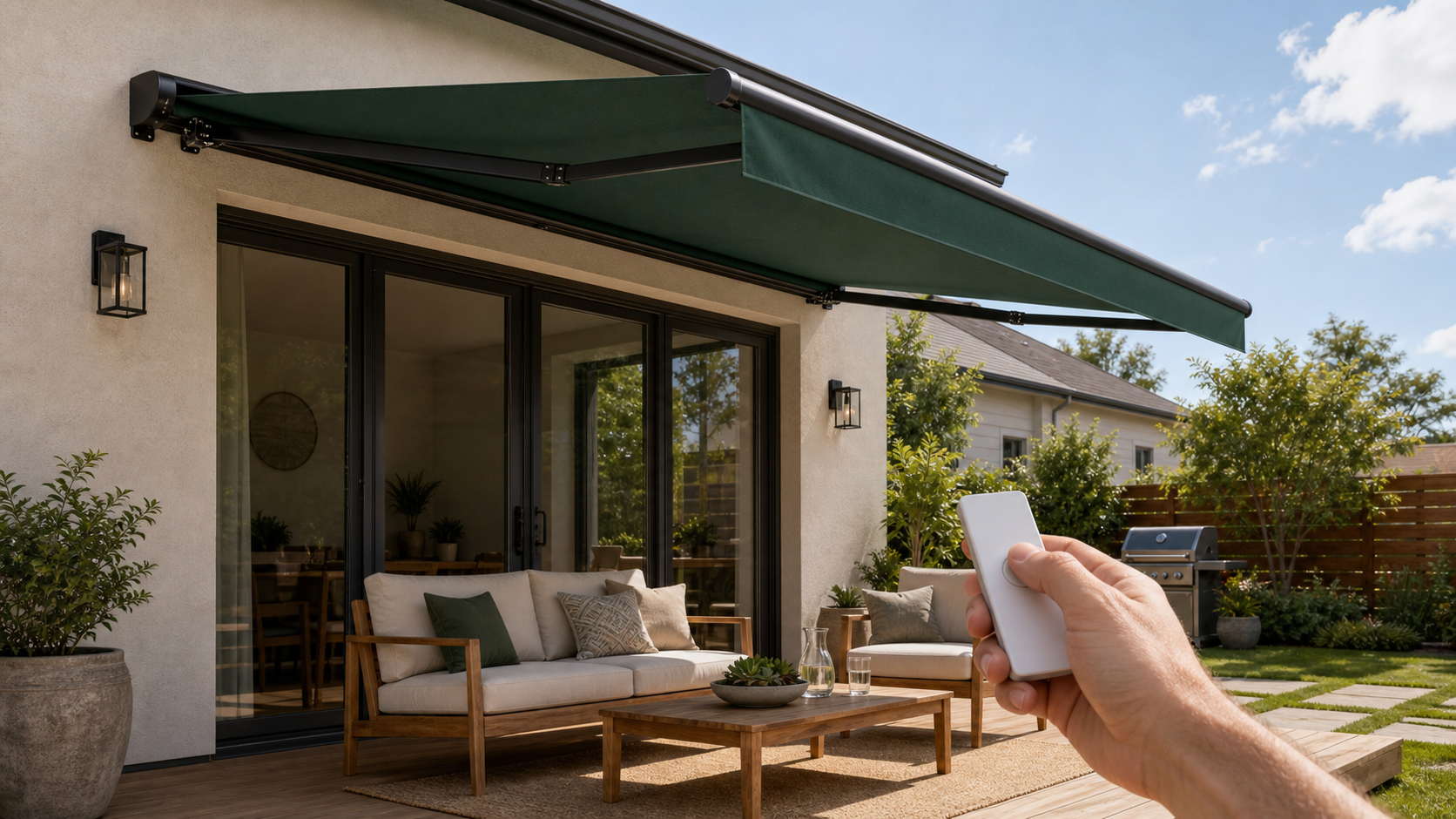
Choosing between a manual crank awning and a motorized retractable awning is not only a price decision. It affects how often the awning gets used, who can operate it, how the wall is prepared, and how confident you feel before production begins.
BESITSOL awnings are selected around real site conditions: width, projection, mounting height, wall material, fabric direction, and the way the outdoor space is used. This guide explains the practical differences so you can choose the operation style that fits your patio, deck, balcony, restaurant terrace, or storefront.
Quick answer: which operation is best?
A manual retractable awning is best when the span is moderate, the awning will be opened occasionally, and you want a simple non-electric setup. A motorized retractable awning is better when the awning is wider, used daily, mounted above a busy seating area, or expected to feel like part of a finished outdoor living system.
Manual crank awnings: simple, direct, and low dependency
Manual crank operation is straightforward. A detachable crank handle turns the gearbox, extending or retracting the fabric. It does not require electrical planning, outlets, switches, remote pairing, or motor troubleshooting.
This makes manual operation attractive for patios where simplicity matters. It can also be a practical choice for seasonal homes, rental properties, and smaller residential decks where the awning is used in predictable weather.
- Best for: smaller or moderate spans, occasional use, simple residential shade, and projects where electrical work is not desired.
- Buyer advantage: fewer electrical planning steps and a clear mechanical operation.
- Tradeoff: opening and closing requires physical effort, especially on wider products or frequent-use patios.
Motorized awnings: daily comfort and easier operation
A motorized retractable awning is selected for convenience. Instead of using a crank, the awning extends and retracts by remote control. This is especially useful when the shade is used every day, when the awning is wide, or when the outdoor area needs to shift quickly from sun to shade.
Motorized operation also supports a more premium customer experience. For restaurants, cafes, and hospitality spaces, staff can adjust shade with less interruption. For homes, motorization makes the awning feel integrated into daily outdoor living rather than like equipment that needs effort.
- Best for: larger patios, frequent use, commercial seating, elevated comfort, and customers who want easier daily control.
- Buyer advantage: fast operation and a more finished user experience.
- Planning note: confirm power location, cable path, outlet position, and any professional electrical requirements before production.
Consider the size and projection first
Operation choice should follow the physical awning size. A wider awning or deeper projection can make manual operation feel slower and more demanding. Before choosing the control type, review the measurement basics on the BESITSOL Measurement Guide.
For custom planning, confirm:
- Overall wall width available for the awning.
- Projection needed to cover the seating or walking area.
- Mounting height and vertical clearance.
- Wall material and bracket position.
- Nearby lights, gutters, doors, windows, soffits, or trim.
Think about who will operate it
The right awning is the one people will actually use. If one person must open and close the awning multiple times per week, motorized operation may be worth the upgrade. If the awning is used only for weekend seating or occasional heat control, manual crank may be enough.
For commercial patios, staff workflow matters. A motorized awning can make service smoother when the sun angle changes during lunch or dinner. For residential patios, think about children, older family members, and guests who may not want to handle a crank.
Match operation to the BESITSOL series
Use the product series as part of the decision. The A380 Series is a flexible residential-scale choice with manual and motorized configurations. The B02 and B04 collections are often considered when cassette protection, architectural presence, or a more finished exterior look matters.
If you are comparing operation and cassette style at the same time, send wall photos and rough dimensions through the contact page. The goal is not to overcomplicate the order. It is to prevent a mismatch between the wall, the awning, and the way the space will be used.
Do not choose operation before choosing fabric direction
Fabric color and operation are separate decisions, but they both affect satisfaction. A motorized awning may be used more often, which means the fabric will be seen more frequently in changing light. Before final production, compare real fabric samples beside siding, brick, trim, and patio furniture.
Order the BESITSOL Premium Fabric Sample Kit if color confidence matters. Screen color is not enough for a custom outdoor product.
Final recommendation
Choose manual crank if you want simple operation, lower complexity, and occasional shade. Choose motorized operation if the awning is large, used often, part of a commercial setting, or expected to feel effortless. In both cases, confirm wall measurements, bracket conditions, fabric color, and delivery access before production.


