



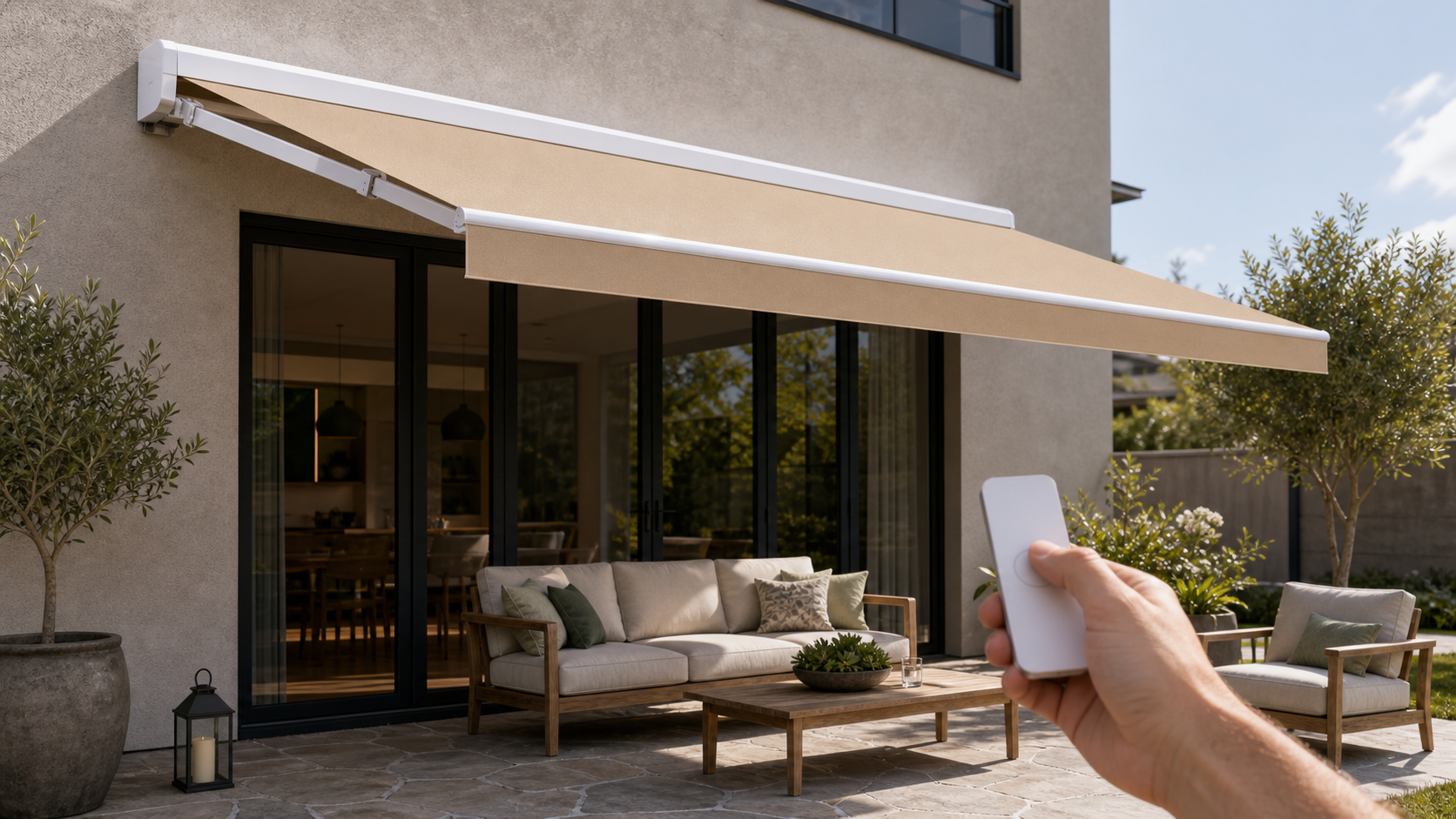
Commercial shade has a different job than backyard shade. It must support customer comfort, staff workflow, curb appeal, brand presence, and the practical realities of a public-facing building.
A retractable awning can help restaurants, cafes, hotels, boutiques, and storefronts create useful exterior space, but only when size, projection, fabric, operation, and mounting are planned together.
Start with the customer experience
For restaurants and cafes, shade is not just a feature. It affects whether guests choose the outdoor table, whether they stay longer, and whether staff can use the patio during stronger sun. For storefronts, shade can make the entry feel more welcoming and help the facade look more finished.
Ask these questions first:
- Where do customers actually sit, wait, or walk?
- What time of day creates the harshest sun?
- Does the awning need to cover dining tables, windows, entry doors, or display areas?
- Will staff adjust the awning during service?
- Is the awning visible from the street?
Projection matters for dining comfort
A shallow projection may look attractive but fail to shade the tables that matter. A deeper projection may improve comfort but requires more careful planning around wall strength, clearance, pitch, and operation.
Map the seating layout before choosing size. Include table edges, chair movement, server paths, planters, railings, and any required walkway clearance.
Operation choice affects staff workflow
Manual crank operation can work for smaller commercial shade needs, but motorized operation is often more practical for active patios. Staff can adjust shade faster and with less disruption, especially when sun conditions change during service.
If you are considering motorized operation, confirm power access, cable routing, outlet position, and whether a licensed professional should review the electrical setup.
Facade presence: open frame or cassette?
Commercial awnings are part of the storefront identity. An open-frame awning can be practical and direct. A cassette-style awning can look cleaner when retracted and may suit a boutique, restaurant terrace, or hotel facade that needs a more architectural finish.
Compare the A380 Series with cassette-style directions when the awning is visible from the street. If you are unsure which profile fits the building, send wall photos through the contact page.
Fabric should match the brand and the building
Commercial fabric needs to work in real light and with brand materials. A stripe may feel classic for cafes. A deep green or charcoal may read more architectural. A warm neutral may soften a hospitality space. The correct answer depends on siding, brick, stone, signage, frames, and outdoor furniture.
Review the BESITSOL fabric library, then test physical samples from the fabric sample kit beside the actual storefront.
Photograph the site before final selection
For commercial projects, photos prevent expensive assumptions. Capture the full facade, the mounting area, seating layout, nearby signs, lights, gutters, trim, and any neighboring doors or windows.
If the awning will sit above customers, involve the installer or contractor early. Large, elevated, or public-facing installations should be reviewed carefully before production.
Use shade as part of revenue planning
A well-planned awning can make outdoor seating more useful, but it should be treated as part of the operating environment. Consider sun exposure, table turnover, evening lighting, storage, weather policy, and staff procedures for retracting the awning during unsafe conditions.
Final recommendation
For restaurants and storefronts, choose an awning by customer use first, then facade design, then fabric. Confirm projection, wall conditions, operation, and real fabric color before production. A commercial awning should look good from the street and work well during service.


