
Quick answer
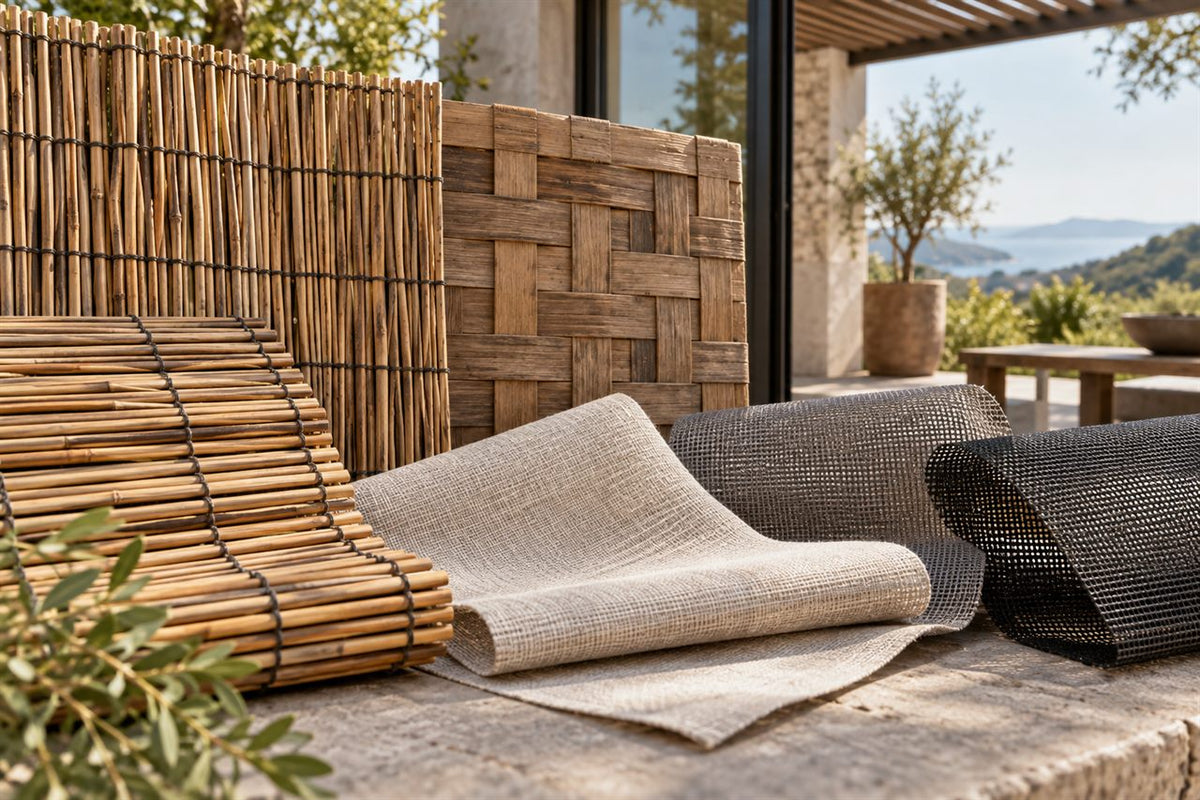
Outdoor bamboo shades are one option within a wider group of natural and synthetic outdoor treatments. Bamboo is usually chosen for texture and a natural architectural look; reed and woven wood can create similar visual effects with different construction; fabric roller shades often offer more standardized openness, color, and outdoor-performance documentation. Compare the material, hardware, exposure, care, and privacy result—not just the product name.
Why the labels overlap
Retailers may use bamboo, reed, matchstick, woven wood, grass, rattan, and natural woven as overlapping shopping terms. The label may describe a visible style rather than a complete material specification. Ask whether the product is made from bamboo strips, reed, wood fibers, synthetic fibers, a blend, or a fabric with a printed natural pattern.
Material comparison
| Material family | Typical visual character | Questions for an outdoor project | Main tradeoff to discuss |
|---|---|---|---|
| Bamboo | Linear texture, knots, warm natural variation | Finish, binding, exposure, hardware, and care | Natural variation and product-specific weather limits |
| Reed or grass | Softer, lighter, more irregular texture | Fiber composition, drying, and binding | May need more careful moisture and storage planning |
| Woven wood | Broader natural palette and structured texture | Wood species, finish, liner, and mount | Heavier construction or different care requirements |
| Fabric roller | Consistent surface and openness options | UV, moisture, cleanability, and hardware documentation | Less raw-fiber texture than bamboo |
| Synthetic woven screen | Designed appearance with standardized performance categories | Openness, UV, fire, wind, and warranty documents | May not deliver the same natural-material look |
This table is a comparison framework. The exact product specification controls.
Choose bamboo when the material language matters
Bamboo often suits projects that already use wood, stone, woven furniture, plants, or other tactile materials. It can make a pergola or covered patio feel more like an outdoor room. Select it when the natural texture is part of the design brief and the exposure, hardware, and maintenance expectations are realistic.
Compare fabric when performance is the main brief
Fabric roller shades can be easier to compare when you need clearly stated openness, UV, moisture, flame, warranty, or commercial-use information. That does not make every fabric product better; it means the performance vocabulary may be more standardized for the project.
Compare reed or woven wood when texture is the priority
Reed and woven wood can produce a similar screen-like effect. Compare the actual fiber, binding, finish, weight, and care routine. A natural-looking product is not automatically interchangeable with bamboo or automatically suitable for outdoor exposure.
What to check before ordering
- [ ] The material composition is written in plain language.
- [ ] The product’s approved exposure is clear.
- [ ] The weave or openness suits the desired privacy and airflow.
- [ ] The hardware is sized for the material weight and opening.
- [ ] The care and storage routine is practical for the site.
- [ ] Any weather, UV, fire, or warranty statement has a supporting document.
- [ ] A physical sample is available when color and texture matter.
FAQ
Are outdoor bamboo shades better than fabric roller shades?
Neither is universally better. Bamboo may better match a natural outdoor design, while fabric may offer more standardized performance choices. Select the material that matches the site conditions and the evidence you need.
Are reed shades the same as bamboo shades?
No. The terms can overlap in retail language, but reed and bamboo are different material categories. Check the composition and construction on the final product page.
Do woven wood shades work outdoors?
Some products are made for outdoor use and others are not. Confirm the exact exposure, finish, hardware, care, and warranty documentation for the product being considered.
Which outdoor shade material gives the most airflow?
Airflow depends on openness, weave, coverage, and wind direction rather than material name alone. Compare the product’s construction and test it in the intended opening when possible.
Next step
Use the BESITSOL Premium Fabric Sample Kit, then compare outdoor bamboo shades for privacy and airflow and review the exposure guide.
Sources
- S7 — Bamboo Blinds Australia, Outdoor Bamboo Blinds FAQ, natural outdoor bamboo category reference.
- S9 — Home Depot, Outside Mount Bamboo Shades, retail terminology reference for bamboo, light control, UV protection, and lift-system filters.
- S8 — Arlo Blinds, Can bamboo shades be put outdoor or on a deck?, product-specific exposure caution.


