



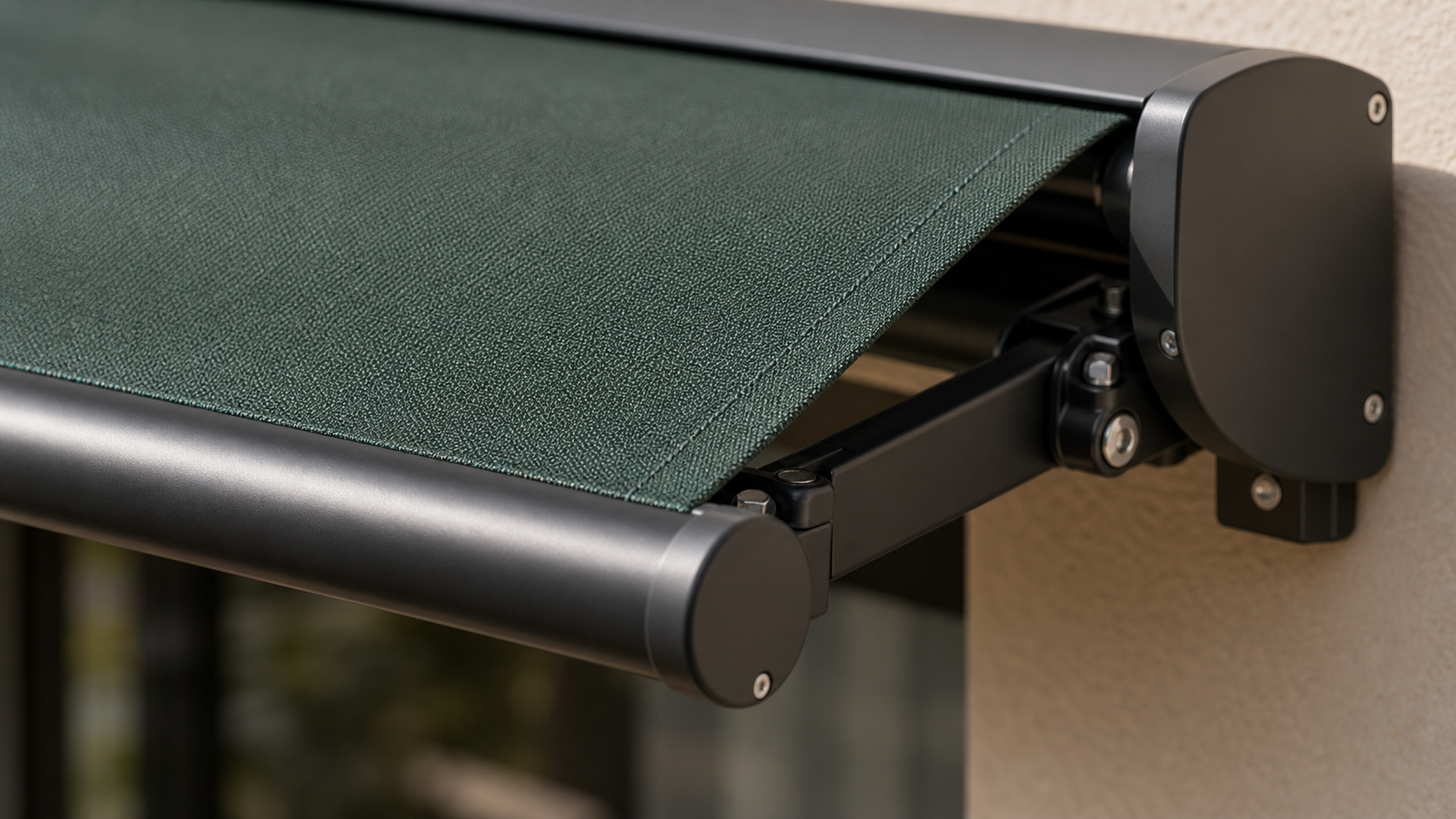
Awning fabric color is one of the easiest decisions to underestimate. A color that looks calm on a screen can look warmer, cooler, darker, or brighter once it is next to siding, brick, glass, patio furniture, and real sunlight.
For a custom retractable awning, fabric should be tested like an exterior material, not like an online color swatch. This guide explains how to use physical samples so the final awning feels intentional after production.
Why screen color is not enough
Digital color depends on monitor brightness, phone display settings, browser rendering, and room lighting. Outdoor fabric changes again when sunlight hits it at different angles. A neutral beige may become warmer in late afternoon. A dark green may look almost black in shade. A gray may pick up blue tones beside cool siding.
This is why BESITSOL recommends checking real fabric before final production. Start with the fabric page, then order the BESITSOL Premium Fabric Sample Kit so you can compare the full current sample set in hand.
Step 1: test fabric beside the wall
Hold the sample directly against the wall area where the awning will be mounted. Do not test it only on a table. The wall color is one of the strongest influences on how the fabric reads.
- For white or cream siding, compare warm neutrals and soft grays carefully.
- For brick, check whether the fabric fights the red, tan, brown, or charcoal tones.
- For stucco, test the sample in direct sun and shade because texture changes color perception.
- For storefronts, check fabric against window frames, signage, and exterior trim.
Step 2: test with patio furniture and flooring
The awning is not seen alone. It is seen above tables, sofas, lounge chairs, pavers, decking, planters, and outdoor kitchens. Place samples near the main furniture and flooring materials.
If the patio has warm wood, a cool gray fabric may feel too sharp. If the seating is black or charcoal, a deep green or neutral stripe may create a better bridge. If the space is already visually busy, a quieter fabric can make the awning feel more premium.
Step 3: check morning, midday, and late-day sun
Color shifts through the day. Test each finalist at least three times:
- Morning: softer light may make colors look cooler.
- Midday: direct sun reveals brightness and contrast.
- Late afternoon: warm light can make beige, yellow, red, and green tones stronger.
If you can only test once, test in the light condition when the awning will be used most often.
Step 4: compare from inside and outside
Many awnings are seen from both the patio and the interior room. Hold the sample outside the window or door and view it from inside. Then step back outside and view it from the yard or sidewalk.
This is especially important for storefronts and restaurants. The fabric must work for customers approaching the building and for people sitting underneath it.
Step 5: narrow the choice with function in mind
A fabric color is aesthetic, but it also affects how the product feels in use. Darker colors can feel stronger and more architectural. Lighter colors can feel softer and may brighten a patio visually. Stripes can create classic awning character, but they should be checked against the building rhythm.
Before finalizing, confirm the product series and size too. A fabric that looks balanced on a small A380 patio setup may feel different on a wider commercial span. Use the measurement guide and compare your fabric choice with the final width and projection.
What notes should you send with your order?
When you are close to a final decision, send clear project notes. Include the fabric code, wall photos, rough width, projection target, mounting height, and whether the shade is for a home, restaurant, balcony, deck, or storefront.
If you are unsure between two or three colors, contact BESITSOL before production. Real photos and fabric codes are more useful than general descriptions like "warm beige" or "dark green."
Final recommendation
Use physical samples outside, against the real materials, at the time of day when shade matters most. A custom awning is too visible to choose from screen color alone. The best fabric is the one that looks trustworthy beside the building, not just attractive in isolation.


