



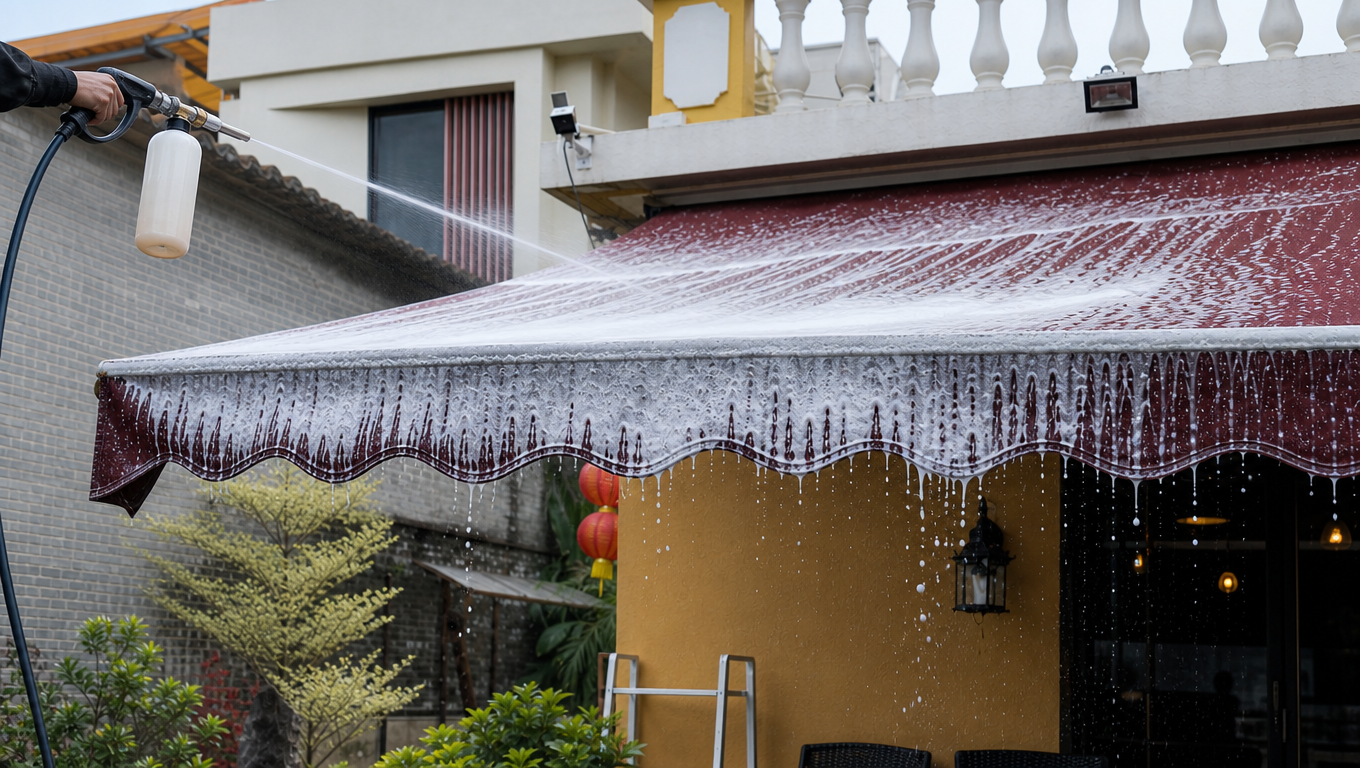
An investment in an architectural-grade shading system is a calculated extension of your property's spatial equity. Just as interior marble surfaces or custom leather upholstery require specific preservation protocols, your exterior canopy demands calibrated attention to retain its flawless curb appeal. True luxury maintenance is never about aggressive chemical intervention; it is about understanding the delicate harmony between advanced textile engineering and the natural elements.
While the marine-grade, solution-dyed acrylic fabrics engineered by Besitsol feature invisible molecular barriers against moisture and soot, atmospheric real-world exposure requires periodic care. By understanding the global care parameters governing luxury shade materials, you ensure your outdoor sanctuary remains immune to seasonal wear and atmospheric degradation.

The Dual-Matrix of Awning Care: Fabric and Hardware Dynamics
A common misconception in exterior maintenance is treating the canopy as an isolated component. A premium shading installation operates as a dual-matrix: the high-performance technical fabric and the powder-coated aluminum structural frame. Environmental contaminants like coastal salt air, airborne industrial soot, and acidic bird droppings do not merely rest on the fabric—they settle on the mechanical folding arms and hinge junctions.
To protect this entire system, high-pressure washers must be strictly avoided. Forcing water out at extreme pressures (exceeding 500 PSI) risks bending precision-calibrated spring arms and instantly lifting the protective hydrophobic nanotech layer from the woven fibers. True maintenance relies on low-pressure thermal hydration and chemical neutrality, balancing the physical longevity of both textile and steel.

The Bi-Annual Light Maintenance Protocol
To effectively mitigate everyday atmospheric dust before it seals into the textile pores, implement a systematic low-intensity clearing cycle every 3 to 6 months. This preventive care routine preserves the immaculate visual profile of your estate with minimal mechanical strain:
- Dry Debris Evacuation: Fully extend the mechanism. Utilizing a soft-bristle broom, gently sweep away dried twigs, leaves, and windblown pollen. Always brush in alignment with the textile weave to avoid mechanical fiber splitting.
- Cold-Water Hydration: Spray the top and underside of the extended fabric using a standard low-pressure garden hose. Allow the clear ambient water to saturate the surface for 3 to 5 minutes, naturally breaking the crystalline bond of dried environmental grime.
- The 5% Chemical Law: If atmospheric film remains, dissolve a mild, pH-neutral, non-detergent soap in lukewarm water (strictly maintaining a concentration below 5%). Lightly apply the solution with a soft sponge, refusing to scrub aggressively to preserve the textile’s water-repellent barrier.
- The Ultimate Evacuation Rinse: Intensely flush the canopy with fresh water until the runoff is entirely translucent. Any soap remnants left on the yarn will act as a chemical magnet, accelerating the adhesion of future airborne particles.
"The true luxury of custom engineering lies in its resilience; a premium surface does not require aggressive force, only consistent, mindful preservation."
Advanced Remediation: Eradicating Mildew and High-Humidity Stains
In highly humid tropical zones or dense coastal microclimates, stagnant ambient moisture mixed with trapped organic debris can create a fertile environment for surface microorganisms. While solution-dyed acrylic is inherently synthetic and completely resistant to rot, surface mold can feed on the external dust film layered over the fabric.
To eliminate persistent biological staining without altering the deep yarn colorfastness (Grade 7-8 baseline), apply a specialized restoration solution:
Architectural Remediation Proportions:
• 1 Cup of standard liquid chlorine bleach (for intensive biological sanitation)
• 1/4 Cup of completely pH-neutral, non-detergent soap
• 1 Gallon (approximately 3.8 Liters) of clean, cold water
Saturate the specific blemish with the solution and allow it to stand on the fabric face for up to 15 minutes. Gently agitate the area with a soft-bristle brush, letting the chemical solution break down the organic binder rather than using physical friction. Rinse the entire canopy surface extensively with cold water. Because Besitsol filaments are solution-dyed prior to yarn spinning, the fibers tolerate this precise bleach formulation flawlessly without experiencing localized color bleaching.

The Law of Thermal Recoil: The Dry-Down Directive
If there is one absolute directive shared across global engineering standards, it is this: never store a retractable awning while damp or wet. Leaving your canopy extended during a passing downpour is perfectly fine; the structure is built to handle heavy hydrostatic loads. However, rolling a wet canopy back into its enclosed aluminum cassette traps stagnant moisture in a dark, high-temperature, and oxygen-deprived environment.
This creates an artificial greenhouse effect that warps the fabric over time, causes unsightly pressure markings, and accelerates mold spore incubation on the trapped dust film. Always allow the fabric to completely air-dry under natural sunlight and ambient air circulation before activating the mechanical retraction system.
Design Note: Real-World Architecture Calibration
Premium exterior design demands perfect tactile synchronization. If your current outdoor canvas has reached the end of its aesthetic lifecycle or requires a complete material upgrade, viewing physical samples is essential. Experience the texture, weight, and light diffusion of our solution-dyed palettes by visiting the comprehensive Besitsol Fabric Library, or request a curated swatch kit to evaluate directly against your estate's facade through the Besitsol Free Fabric Sample Kit. The 27-color collection is 100% refundable upon final custom system order.
Request Your Swatch Kit

