



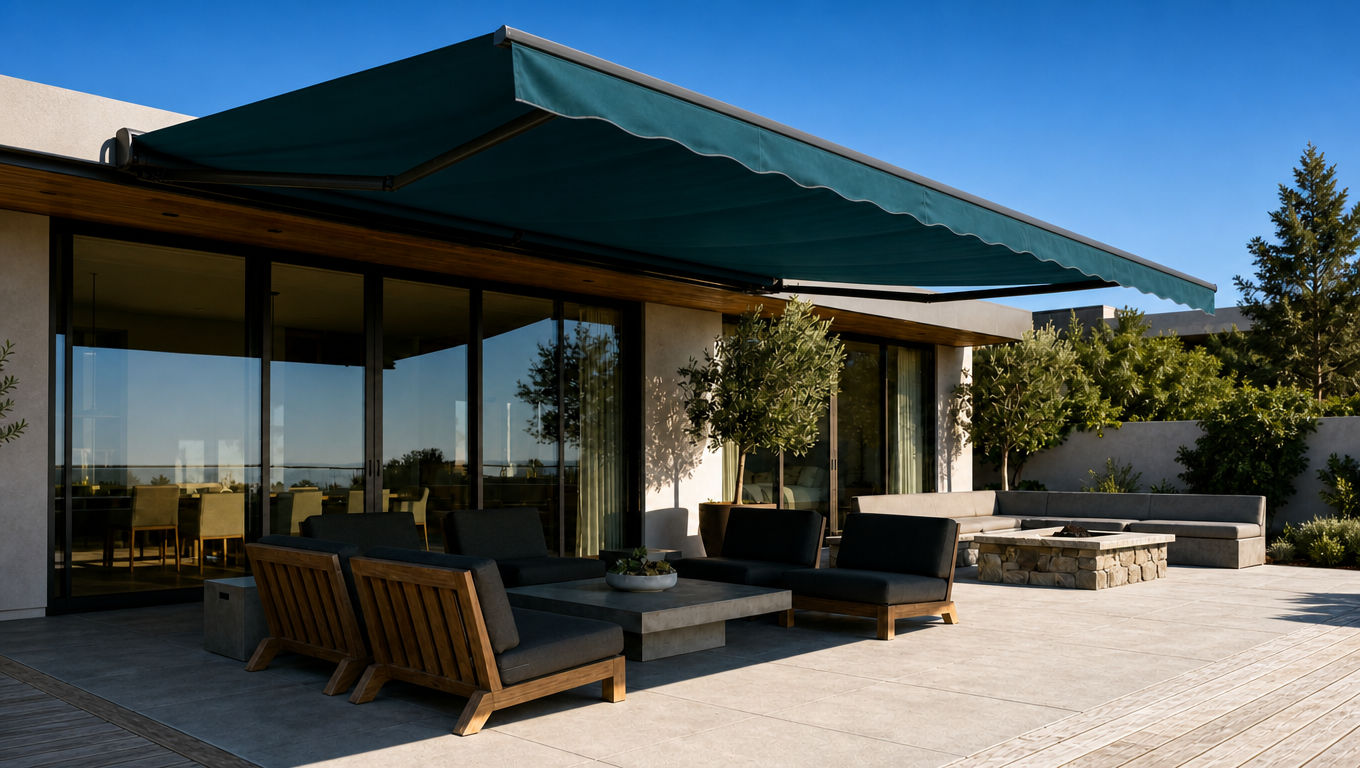
Investing in an outdoor shading system from Besitsol is a definitive architectural upgrade for modern estates. However, navigating the premium shade market requires looking beyond basic color aesthetics. To ensure long-term durability, homeowners must evaluate materials through strict engineering lenses. This guide breaks down exactly how to choose architectural-grade shading for your home using verified textile metrics, empirical testing, and structural standards.
Before custom engineering begins, understanding your material baseline is essential. You can discover our fully curated palette of advanced weaves directly at the Besitsol fabric library.
The Core Metrics of Architectural Shading Performance
1. Hydrostatic Water Pressure Resistance
Standard retail awnings often rely on temporary chemical sprays that degrade quickly, leading to water penetration during prolonged rain. Architectural-grade waterproof awning fabric must feature a permanent hydrostatic head rating. A threshold of 300mm+ ensures the material repels pooling water under intense storm conditions while maintaining optimal microscopic breathability to prevent under-canopy heat trapping.
2. Solution-Dyed Polymer Saturation
To resist UV degradation, premium shading systems utilize 100% solution-dyed acrylic. Unlike piece-dyed fabrics where color is applied only to the surface of the woven yarn, solution-dyed textiles infuse UV-stabilized pigments deep into the polymer melt prior to extrusion. This engineering methodology yields an industry-maximum Grade 7-8 colorfastness rating under extreme solar radiation.
3. Oleophobic Nanotech Shields
Exterior shading faces constant exposure to environmental soot, organic debris, and bird droppings. To achieve a low-maintenance, self-cleaning surface, modern materials undergo nanotech barrier processing (such as the advanced Infinity Process). This cross-linked molecular shield delivers an oil and water repellency rating of ≥ 5, forcing contaminants to slide off effortlessly during standard rainfall.
4. Structural Tensile Yield & Anti-Crazing Geometry
Frequent retraction cycles generate immense physical stress along the fabric seams, often causing lower-tier materials to suffer from "crazing"—micro-fractures that manifest as white, bleached crease lines. True premium systems require a non-glare, matte architectural finish anchored by a heavy-duty tensile strength of 125 daN / 5 cm to maintain absolute flatness and structural integrity over time.

Material Performance Matrix: Comparative Analysis
When selecting your retractable awning material, understanding the baseline performance of different textile groups is critical for a high-return investment:
| Material Category | UV Fading Tolerance | Hydrostatic Capacity | Aesthetic Finish | Structural Application |
|---|---|---|---|---|
| Premium Solution-Dyed Acrylic (Besitsol) | Grade 7-8 (Maximum) | 300mm+ Industrial Rating | Matte / Highly Anti-Crazing | High-End Residential Estates |
| Standard Vinyl Laminated | Grade 4-5 (Moderate fading) | 100% Imperial Waterproof | Glossy / Prone to cracking | Commercial Signage / Heavy Shelters |
| Piece-Dyed Polyester | Grade 3-4 (Rapid breakdown) | <100mm (Prone to leaking) | High Wrinkling / Sagging | Entry-Level Temporary Shades |

Architectural Integration: Matching Solids and Stripes to Your Architecture
Performance parameters protect your investment, but the right aesthetic integrates the shading system into your home’s architecture. Elegant solid tones offer a clean, minimalist extension to modern properties, reducing visual clutter. On the other hand, classic and contemporary stripes bring a high-end coastal heritage or luxury resort aesthetic to traditional brickwork and patio spaces.
"A premium outdoor shade acts as an adaptive exterior wall. The way its texture absorbs and diffuses harsh daylight determines whether your patio feels like a standard backyard or a luxury open-air pavilion."
— Besitsol Design Collective
On-Site Verification: The True Daylight Testing Rule
Because digital monitors operate within limited RGB color spectrums, ambient rendering cannot accurately project how a textile's weave will interact with shifting exterior lighting. Factors such as architectural wall texture, siding angles, and late-afternoon sun glare heavily influence visual output.
To eliminate calibration errors before final custom manufacturing begins, we highly advise examining physical materials on-site. Homeowners can secure our entire 27-swatch active library via the Besitsol Free Fabric Sample Kit. This allows you to evaluate real-world compatibility against your property's brickwork, trim, and patio furniture under true, natural sunlight.
Eliminate Guesswork with 100% Risk-Free Swatches
Engineering your custom shade requires precision. Our complete 27-swatch fabric sample kit is available for 15.99 USD and is 100% refundable. Review the textile textures in real daylight; your sample fee is automatically credited back as a full rebate on your final awning order.

Empirical Data: Independent Laboratory & In-House Test Results
To provide absolute transparency for architects, builders, and discerning homeowners, we back our architectural-grade shading claims with rigorous technical benchmarks, verified by leading international textile standards and our internal quality control protocols.
1. External Standardization Benchmarks
Besitsol solution-dyed acrylic textiles (powered by Recasens engineering) consistently achieve top-tier metrics across standardized European and American physical testing codes:
- Wind Resistance Certification (UNE-EN 13561 Standard): Certified under Class 2 and Class 3 thresholds, proving structural integrity and safety under sustained wind loads up to 38 km/h and 49 km/h respectively.
- Water Spray/Repellency Rating (ISO 4920 / AATCC 22): Achieved an initial Spray Rating of 100 (Maximum), dropping no lower than 90 after 10,000 simulated abrasion cycles, confirming a persistent hydrophobic barrier.
- Solar Protection Factor (ASTM E903 / EN 410): Blocks up to 98% of harmful UVA/UVB radiation, drastically lowering the solar heat gain coefficient (SHGC) of adjacent indoor and outdoor spaces.
2. Besitsol In-House Stress-Testing Results
Our specialized manufacturing laboratory conducts ongoing stress tests to verify how our materials hold up under real-world, long-term wear:
- 5,000+ Roll-Cycle Fatigue Test: Our fabrics underwent five thousand automated retraction cycles under a constant mechanical spring tension of 15 kg. Post-test optical microscopy confirmed zero macro-fractures or white 'crazing' streaks along critical stress folds.
- Accelerated UV Weathering (Weather-O-Meter Exposure): Subjected to 1,000 hours of continuous high-intensity xenon arc light and moisture cycles (simulating approximately 5 years of harsh mid-day solar exposure). The fabric maintained a Colorfastness Grade of 7-8 on the international blue wool scale, representing virtually unnoticeable fading.
- Salt Spray & Oleophobic Resistance Protocol: Exposed to a 5% continuous saline mist for 240 hours alongside industrial soot compounds. The chemical-free nanotech shield retained an oil repellency rating of ≥ 5, preventing deep atmospheric soot bonding or microfilm colonization.
Disclaimer: Laboratory test metrics reflect performance parameters achieved under controlled environments. Individual on-site performance may vary depending on local microclimates, proper mounting orientation, and adherence to recommended basic maintenance workflows.


